

- A table is where your data lives and is queried.
- A namespace is how groups of tables are organized and resolved at the catalog level.
Understanding tables
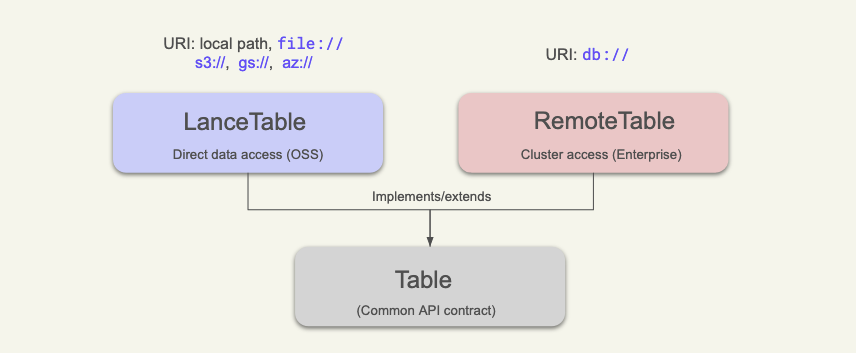
A table is the core data abstraction in LanceDB: a structured dataset with schema, indexes, and versioned updates. What changes between deployments is how that table is addressed and accessed. The mental model below clarifies table types by connection mode:LanceTable: direct table access (local path,file://,s3://, and similar object-store paths). This is the common mode in LanceDB OSS.RemoteTable: catalog-backed table access through a server/cluster (db://...). This is the mode you will use in LanceDB Enterprise.
Semantic difference between tables and namespaces
The easiest way to think about this is:- A table answers: “What data do I store and query?”
- A namespace answers: “Where does this table name live in my catalog hierarchy?”
For simple use cases where you have a relatively flat set of tables, you can ignore namespaces and just use table paths directly.
As your application needs evolve and your tables grow in number and complexity, you may move from table-centric thinking
to catalog-centric thinking. Check out the Namespaces and the Catalog Model guide to learn more.